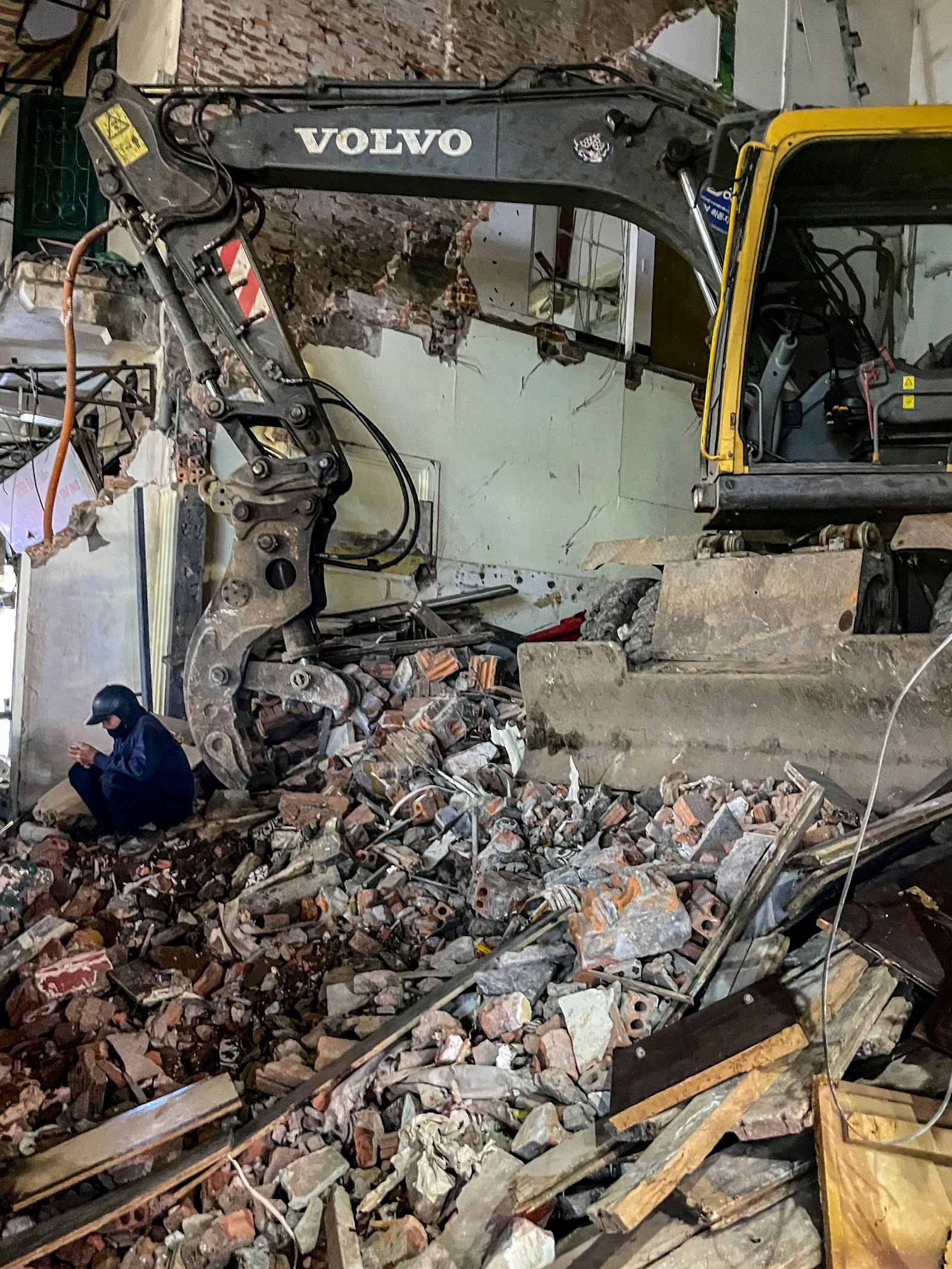
Construction and demolition waste makes up a significant share of building rubble collected across the Vaal Triangle. For builders and contractors, a bit of planning around rubble reduces cost, improves safety, and increases how much material actually gets recycled.
Plan collection intervals, not one big clear-out
Sites that only clear rubble at the end of a project tend to accumulate large, mixed piles that are harder to sort and more likely to include contamination between material types. Scheduling regular collections throughout a project keeps rubble volumes manageable and each load more consistent.
Separate materials on site where possible
- Keep concrete and brick rubble separate from timber offcuts
- Set aside metal offcuts, pipes and fittings for scrap collection rather than mixing them into general rubble
- Flag any asbestos-containing material immediately — it needs specialist handling, not standard rubble removal
Order only what you need
Over-ordering materials — bricks, cement, timber — is a common source of avoidable waste. Accurate quantity estimates upfront reduce leftover material that ends up as rubble at project close.
Why it's worth the effort
Beyond the environmental benefit, cleaner, better-sorted rubble is genuinely easier and faster for us to collect and route appropriately — which keeps your site moving and your costs predictable across a project rather than facing one large, complicated clear-out at the end.